.svg)
+41 44 527 30 40
answers to the most important questions for parents of a newborn
.jpeg)

At the end of your postpartum period, you will receive your baby's health record book at the hospital. It is available in German, French, or Italian and contains personal information as well as general recommendations. Always bring it with you to check-ups with your pediatrician, to maternal and paternal counseling sessions, or for emergency consultations.
https://www.paediatrieschweiz.ch/eltern/
You will certainly be able to clarify many questions after your hospital discharge with your outpatient postpartum care provider or at a maternal and paternal counseling center.
hebamme.ch
wochenbettbetreuung.ch
During the day, you can contact your primary pediatrician or use the Ärztefon service to find out which pediatricians are on duty in your region.
aerztefon.ch
In the city of Zurich, there are various walk-in clinics open until the evening for emergencies. Two pediatric emergency departments are open 24/7 and both offer an emergency advice hotline: the University Children's Hospital Zurich and the Zurich City Hospital.
kispi.uzh.ch
stadt-zuerich.ch/triemli
If you live in the Canton of Zurich, you will be informed by mail about the location of your local maternal and paternal counseling center. You can visit them weekly with your baby for weigh-ins, to ask questions, and to connect with other parents.
muetterberatung.ch
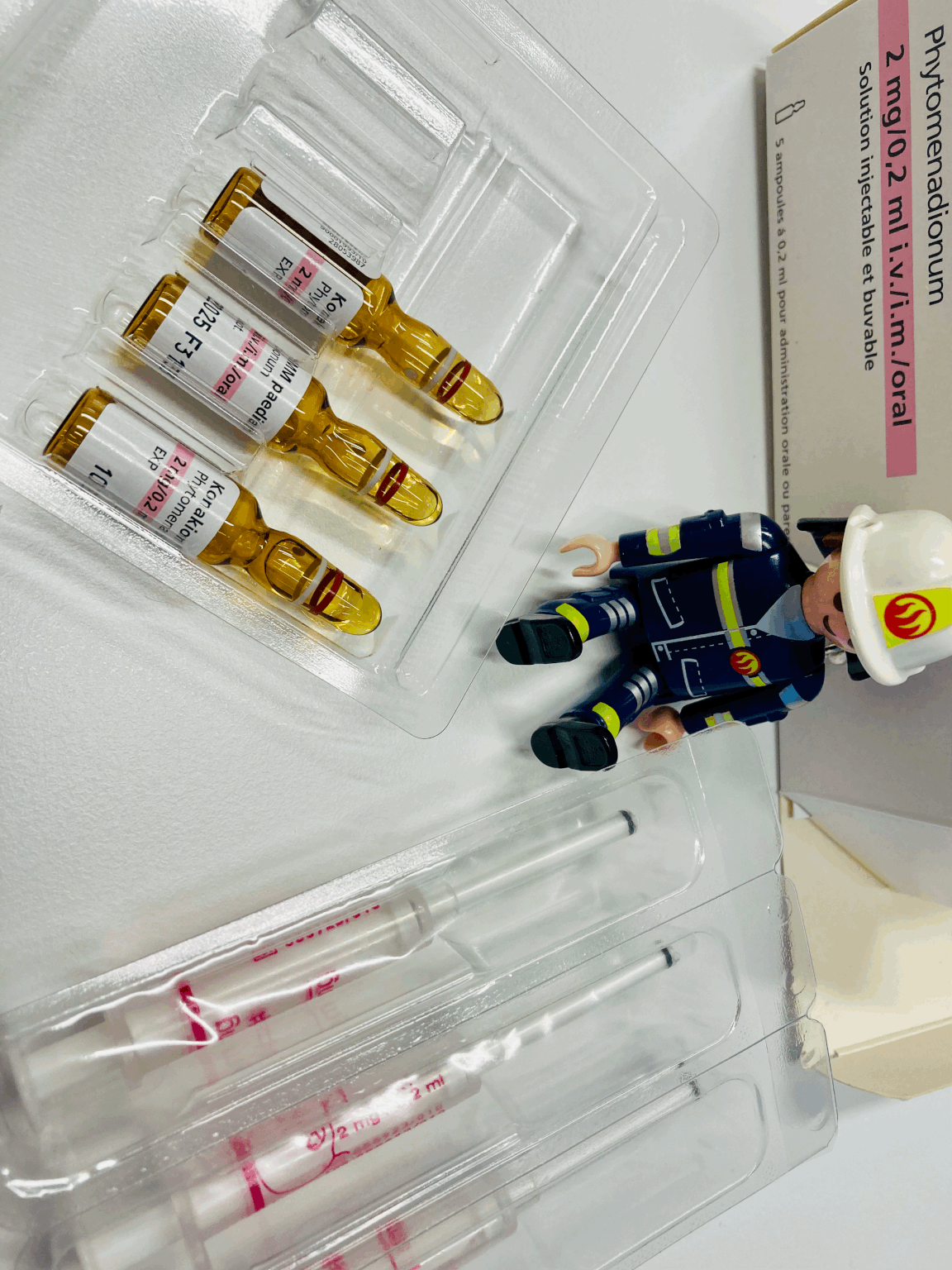
You should schedule your baby's first appointment with their future pediatrician for when they are one month old. At this visit, your baby will receive the third and final dose of Vitamin K (essential for blood clotting). A hip ultrasound will also be performed by this time at the latest to check for any congenital abnormalities.
Starting at two months of age, the Federal Commission for Vaccination and the Federal Office of Public Health recommend beginning vaccinations to protect your baby from serious infections.
For nighttime sleep, the safest place for your baby is in their own crib within the parents' bedroom (for approximately the first six months). Always place your baby on their back at night, ideally in a sleeping bag and on a relatively firm mattress (avoid stuffed animals or positioning aids). The recommended room temperature is 18 to 20°C. While your baby's hands, feet, and nose tip may feel cool, the back of their neck should feel comfortably warm. Do not smoke near your child.
During the day, while you are present, occasionally place your baby on their stomach (tummy time) or on their side. Alternate the position of their head between the left and right sides. If a baby is kept exclusively on their back, it can lead to a stiff neck and skull deformation
If you feel that your child is unwell, do not hesitate to have your baby seen by a pediatrician during the first few weeks. Infections in young infants can quickly become serious. Signs of infection in small babies include: poor feeding, unusually long periods of sleep, or restlessness accompanied by nervous crying, paleness, and fever or low body temperature (normal body temperature is 36.5°C–37.5°C).
The time after birth is not easy (sleep deprivation, hormonal changes, baby blues). Allow friends or family to help you with caring for the baby and with daily chores. If things feel overwhelming, reach out to your gynecologist, your pediatrician, or services such as maternal and paternal counseling. Help is available and necessary to protect both you and your baby.
kinderundgewalt.ch

%204.png)

.jpeg)





.jpeg)